

Facilitating Climate Democracy in Rural Communities: An Interview with Natalie Montecino
BY: CRISTY WATKINS
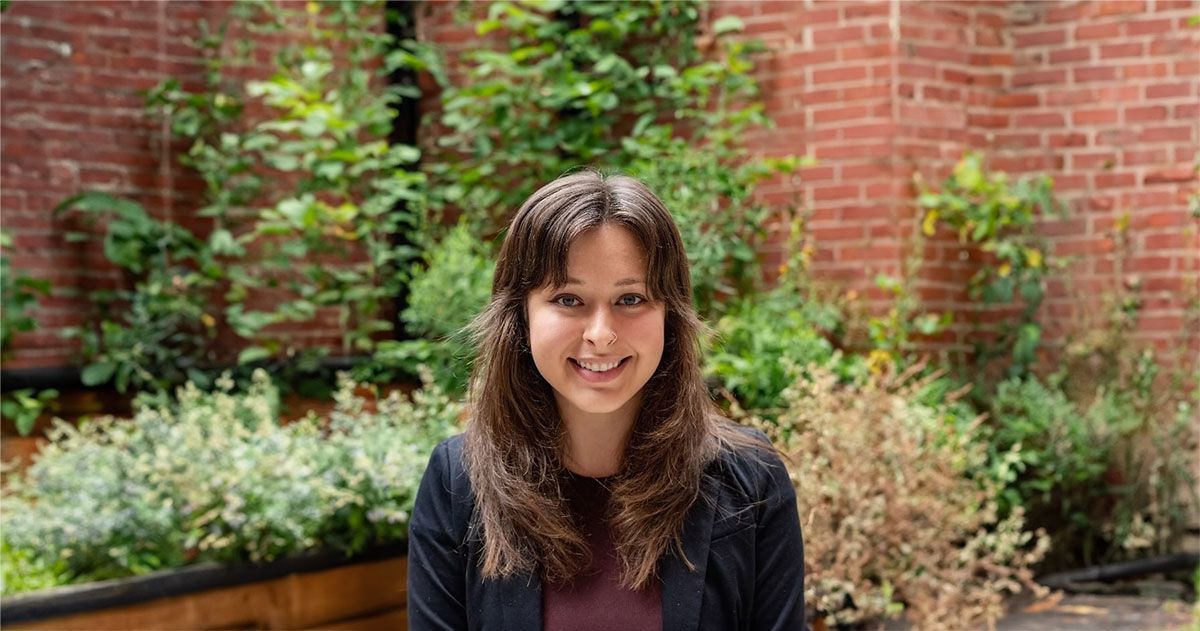
Natalie Montecino is the Executive Director of the Climate Democracy Initiative (CDI), a role she stepped into last January after first joining the organization in 2023 as Programs Director. She leads a team of eight staff and Senior Fellows, directing organizational strategy, guiding fundraising, and building relationships from the local to international level. Evenings and weekends, she teaches two courses for Stanford University’s SPICE Program for students based in Japan on sustainable development, U.S.-Japan relations and social entrepreneurship.
She and her CDI colleagues will join us at the 3rd Annual NSS Conference next week, presenting their work on Wednesday August 19th (Session 9C): in Catalyzing a Rural Climate Renaissance: Local Voice, Trusted Partners, and Collective Action
Community Engagement: Timing, Capacity, Fatigue
Cristy: In your NSS session, you begin with the premise that community engagement in rural areas often happens too late or feels extractive. From your perspective, why is this? What are some of the reasons traditional engagement models short-change or even fail rural communities?
Natalie: Before I share some of my thoughts on this question, I want to be clear that our work at CDI has a rural focus, but the problems I'm describing aren't unique to rural places. We see the same patterns in environmental justice communities and in underinvested urban neighborhoods, and honestly, a small urban neighborhood has more in common with a rural town on this than most people assume. I think there's real opportunity for partnership there.
Timing
Natalie: But back to your question, Cristy, the first reason is timing. In development or infrastructure siting, there's almost always a proposal already on the table by the time anyone talks to the community. Someone from outside has an idea and brings it in, which we see consistently on the infrastructure side of our work. A developer wants to build a solar farm, so they start knocking on landowners' doors. For an individual landowner sitting on plots that are no longer arable, that can be an exciting deal. What this doesn't do is translate into any benefits for the rest of the town, or the county.
When there is already a predetermined proposal and terms in place, there isn’t a lot of room for meaningful engagement to occur.
I do want to acknowledge that developers need certainty. Infrastructure is one of the riskiest investments there is, and no developer can realistically wait two years while a community organizes itself and comes back with its own terms. So whatever engagement we do has to work on both sides of that. For us, timing means starting the conversation long before the proposal shows up, or before climate impacts get worse. When a community already has a locally defined platform to work through these questions, people know what they want by the time a developer arrives, and they can say so on a timeline that actually works for everyone.
Capacity
Natalie: The second reason is the capacity we assume a community already has. I live in a town with a major university and close to 170,000 full-time residents. That means we have the luxury of dedicated planners, resilience staff, climate specialists, and experts of just about every kind. I cannot make that same assumption about a town of 3,000 people. That town may not have a full-time planner on staff, or legal counsel who can sit down with a contract and negotiate terms with a developer on behalf of the community.
What often happens as a result is engagement specialists from outside of the community arrive with the best intentions, expecting to find a counterpart on the other side. They are looking for someone in the community with a clear role, the right expertise, and some prior experience with this exact kind of decision. That kind of person doesn’t always exist in every community, and that’s especially true in places that are already stretched thin. So a lot of the work turns out to be building trust between residents and the outside experts, and then making sure those experts can accurately represent what the community actually wants. That takes time, and it takes honesty about who you’re there to actually benefit.
Engagement Fatigue
Natalie: The third thing our fieldwork keeps turning up is engagement fatigue, and rural communities feel it acutely. There are plenty of universities and nonprofits like ours who show up saying we want to engage you, we want to help. When three different organizations do that in a single year, each one starting the process over from the beginning, each one drawing on the same ten residents who are willing to give up an evening, people get worn out.
If a community is repeatedly asked to show up and give their input, but it doesn't actually translate to different outcomes, what then is the incentive to continue showing up?
Fatigue tends to get read as apathy. Nobody comes to the public meeting, nobody files a comment, so the conclusion is that nobody cares. I read it differently. Those folks have already given their time to this once or twice or three times over, and they watched it go nowhere.
Community Visioning
Cristy: The Climate Democracy Initiative uses a ‘Community Visioning’ model to engage rural communities more effectively. Can you describe how this process actually works on the ground? How do you facilitate, without being top-down, the movement toward a cohesive collective platform?
Proactivity
Natalie: Proactivity sits at the center of everything we do at CDI, and Community Visioning is no exception. What it means in practice is a community talking with itself, across the diversity of its residents, well before anyone from outside shows up with a proposal. What do people want for this place? What should the next ten years look like here, or the next twenty, or the next fifty?
When a community works through that visioning process together and arrives at a desired future it can name, we can help build toward it. The vision belongs to the community. Our part is making room for the conversation and helping turn what comes out of it into goals concrete enough to act on.
It's hard to ask people to give up an evening for a hypothetical, and if all you can offer is a warning about something that might arrive someday, you shouldn't expect a crowd. But people are rarely short on ideas about what they want for their own town and their own kids. Start there, and by the time a developer knocks or a disaster hits, the community already knows what it's working toward and can measure the challenge in front of it against that vision.
The Invite-In Process
Natalie: This is true across all of our work: we operate on an invite-in basis only. We don't approach a community and tell them we think they have a problem and they should work with us to fix it. We get to know people through networks that already exist, and nearly every invitation we've received has come through word of mouth. Someone who has worked with us before says to a community somewhere else, I think you'd get a lot out of working with this team.
The 'we're here to help you' model doesn't work. People need ownership of what happens to them and to their community. When a community has agency, they define and cultivate their own change.
I'll admit this made for slow going in our early years. But once we had a track record of actually being invited to the table by communities, the pace changed. Trust that used to take two years to build now starts from a much stronger place, much faster, because people can see we are there to support them on their terms.
Facilitator, Not Advocate
Natalie: Our role is to hold the space for an engagement process to happen. We bring in outside experts when a community needs them, and we help distill a platform from which future decisions can be made. We don't come in with an agenda.
So if a community invites us in because a solar developer has approached them, our goal is not to get that community to say yes or no. I know that surprises people. But our goal is to support a community in defining for themselves what they want for their own future. We then facilitate for them access to resources, planning processes, and trainings they might want or need to make the desired future a reality.
If we are going to be good stewards of democracy, we need to let the process of engagement unfold naturally and not try to tip the scale in any one direction
I do believe clean energy offers real economic and environmental benefits, and I want to see more communities take advantage of them. It just can't happen on my timeline, or on the climate movement's timeline alone. If it's going to have any staying power, the space has to exist for communities to decide for themselves.
Bumps in the Road
Cristy: As you have implemented this model, have you run into any bumps in the road, surprises, or barriers that made you rethink or adjust the approach?
CDI’s Name
Natalie: Here's the truth: as we're often reminded, 'if you've met one community...you've met one community.' Each community is different. They have their own cultures, processes, ways of life, and identities. It's incumbent upon us, once invited in, to meet them where they're at and learn these things, come to know them on their own terms.
Also, we've been asked more than once if having the words "climate" and "democracy" in our name is a problem. What CDI is focused on is the increasing threat communities nationwide see from severe storms, continuing drought, and year-long fire seasons and the ability to define, for themselves, how to address those challenges.
Not shying away from our core values...we very rarely find anybody who doesn’t believe in the value of democracy and doesn’t want that for their community, for their children.
What's worked when our name is questioned is not shying away from our core values, and not giving up on the belief that everybody holds something they care about in the natural world. Everyone has a stake in the resources around them, and climate change threatens those resources. The same goes for democracy. When we sit down and get to what democracy actually is, what it means, who it's for, we very rarely find someone who doesn't believe in it or doesn't want it for their community and their kids.
Where we have gotten creative is in the language. We don't always lead with climate and democracy. We're not there to make a moral argument. What we want is for communities to be prepared for the reality they're living in now and the one that's likely coming, in terms of both threats to their local environment and the development headed their way. When the conversation is genuinely about resilience at the community level, everybody gets behind it.
Partnerships and Sustained Action
Youth Involvement
Cristy: Youth can be incredibly energetic and passionate, and they can also be busy, have multiple competing interests, and plans that take them to other endeavors. How has CDI's approach leveraged youth involvement such that communities build their own independent local capacity?
Natalie: You've named the hard part, and in rural communities it often lands even harder. Ask a small town what it has lost over the past twenty years and young people are usually top of the list. Students graduate and leave, for school or work or just to see what else is out there, and we want that for them. So the question we're always working on is what stays behind after students go on to their next adventure.
Here's what we've found. Young people are already raising climate and civic ideas in their schools and towns, and often the adults around them want to respond but don't quite know how. So that's the work. We help educators, organizations, and local agencies become genuine partners to young people, which means knowing how to take a student's idea seriously and having somebody to call when it needs more than one institution to happen. Those calls get made because a student has an amazing idea. The collaboration that emerges, though, continues to grow long after that student graduates.
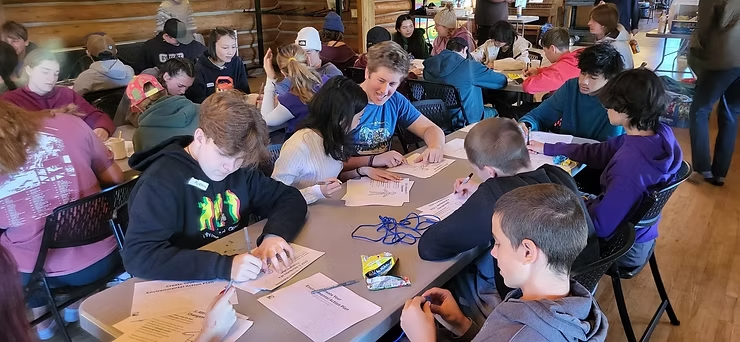
That concept of relational capacity building through youth empowerment is what ECLIPSE is built around, and it's why we start by listening. Where are young people already leading on their own? What is the community trying to address at the local level? What relationships would make those two things meet? More often than not the opportunities are already there and simply haven't been connected. That's true anywhere, though larger cities tend to have more established networks. Rural communities have the same passionate young people and far fewer pathways linking them to broader civic and environmental work.
Adults love to call youth ‘the leaders of tomorrow.’ What we see is them leading today.
We’ve worked with students who took on indoor air quality in their own schools, who advocated for the protection of public lands, who helped rehabilitate wildfire burn scars, and who designed and taught their own civic lessons so that other people could understand how to participate in the democratic process. None of those ideas were waiting on us. What we could do was make sure the adults around them were ready to support their leadership, and that every one of those projects left a community better connected than it was.
Leadership in Southern Colorado
Natalie: One of my favorite examples of a recent success with our ECLIPSE program comes from the ripple effect we're seeing across Southern Colorado. Last year, we worked with more than 300 educators, both in and out of school, along with over 35 community organizations and local coalitions, to help identify authentic pathways for youth voice and leadership to emerge within their own communities. Every community looked a little different, but the goal was the same: create meaningful opportunities for youth to be partners in local priorities, not just observers.
Those conversations led to some incredible outcomes. In one community, we partnered to remove barriers like transportation and financing so that, for the first time, 30 middle school students and their educators from Southern Colorado could attend a statewide convening on youth environmental leadership. We also partnered to create a dedicated youth track at a traditionally adult-centered environmental summit, ensuring young people have a meaningful space in the room alongside community leaders.
What has been most inspiring isn't the events themselves. It's what happened afterward. Students came home saying, "We could do that here." Educators left with new partners, resources, and organizations they could connect with to support student ideas. Those students are now leading recycling and composting initiatives, designing environmental action projects, partnering with nationally recognized organizations, and stepping into youth advisory roles for the first time.
What has been most inspiring isn't the events themselves. It's what happened afterward. Students came home saying, "We could do that here."
Rather than replicating someone else's model, we're helping communities create pathways and actions that reflect their own culture, strengths, priorities, and voices, while surrounding youth with an ecosystem of adults and organizations ready to help remove barriers and support their ideas.
To me, that's what building local capacity really looks like. It's students realizing they belong in these spaces, educators knowing where to turn or what to lean into when students have an idea, and communities creating lasting pathways that allow youth leadership to continue growing long into the future.
Rural Climate Renaissance
Cristy: I love your title, Rural Climate Renaissance. Renaissance implies a revival or a restoration of something. What does climate renaissance mean in the context of Colorado communities, the ones that you work with, and what are they returning to?
Natalie: Actually, the title of our panel was inspired by the Rural Renaissance Project, which CDI has been a member of for two years. It's run statewide by the University of Denver, as part of the Colorado Project at the Josef Korbel School of International Studies. That's also where we've come to work closely with one of our panelists, Aaron Miltenberger, who directs the Boys and Girls Club of the San Luis Valley.
I think renaissance centers around the values of stewardship that rural America has exemplified for a very long time.
The climate renaissance piece isn't about returning to a particular way of doing things. Plenty of those older ways aren't viable in a future shaped by climate change, and we know that. For me, renaissance centers on the values of stewardship that rural America has exemplified for a very long time. Stewards of natural resources, stewards of agriculture, stewards of local economies. The question in this new renaissance is how we amplify the leadership rural communities are already holding, and do it in a way that lasts.
To that end, resilience is on our minds constantly. How do you hold onto a tradition of stewardship in a world that climate change is actively rearranging? How do we get to the future we want by a more resilient path?
The Future
Cristy: What's next? Does the Climate Democracy Initiative have goals for expansion?
Natalie: While we're headquartered in Colorado, and many of our forays into the climate democracy space have started here, our call is to the national stage. In fact, we already have programming branching out across the country and abroad.
As a young and scrappy organization, our growth has been opportunistic. We go where we're invited. This next chapter is about being more intentional, building partnerships in the geographies where the starkest climate impacts are colliding with rural communities that have never been proactively engaged to prepare for them.
Part of our national scaling includes our recently launched Community Climate Resilience program, which is focused on extreme weather and emergency management. This summer we hosted our first national convening at the Pocantico Center in Tarrytown, New York. We brought together representatives from more than 25 organizations around the country, many of them people who had just lived through and led during some of the hardest disasters we've seen recently. We had leaders from Hurricane Helene, the Eaton and Palisades fires in California, and the flooding in Texas, to name just a few.
We see an opportunity for democracy and civic engagement to be the foundation of the future of community resilience.
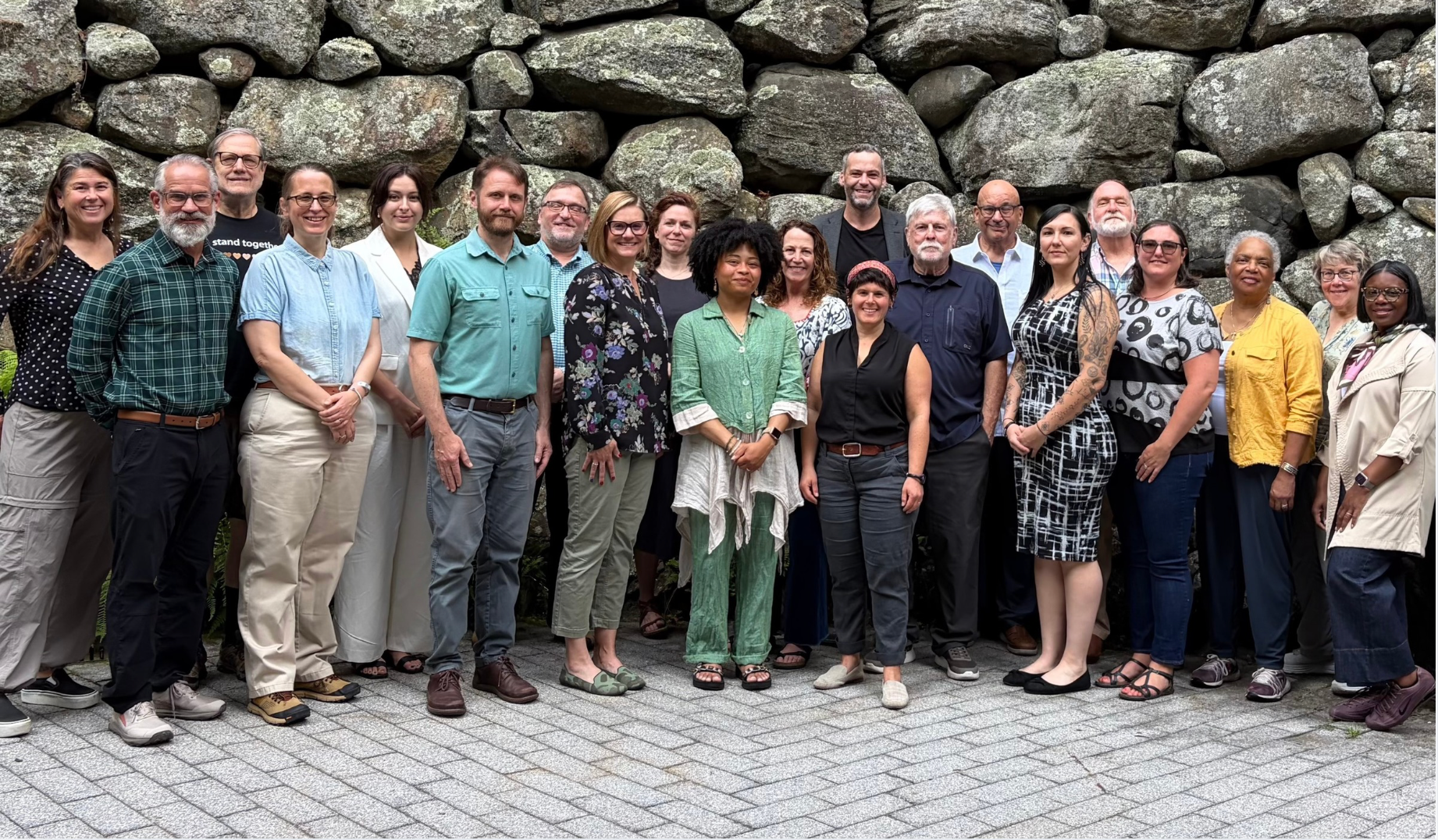
Natalie: The disaster space is new territory for us at CDI, but the ground is shifting underneath everyone working in it. Federal capacity is declining, programs are fragmented, and funding access is increasingly restricted. We see a real opening here for democracy and civic engagement to become the foundation of what community resilience and crisis readiness looks like.
Whether working with a community or empowering youth leadership, CDI exists so that small and rural communities can speak for themselves and be answered. We work with anyone ready to say what they want for their own future.
The NSS Annual Conference
Join hundreds of cross-sectoral sustainability professionals as they share their work that champions evidence-based research, innovative and accessible solutions, and the persistence and preparation essential to building a hopeful and resilient future.
Inspiring plenaries, symposia, roundtables, posters, workshops, professional development courses, fun leisure activities, and networking opportunities await.
The conference will be hosted by Colorado State University's School of Sustainable Futures and the CSU Climate Hub at Spur.
Click here to register.
additional recent news