This spring, I had the privilege of representing the
Climate Democracy Initiative at the
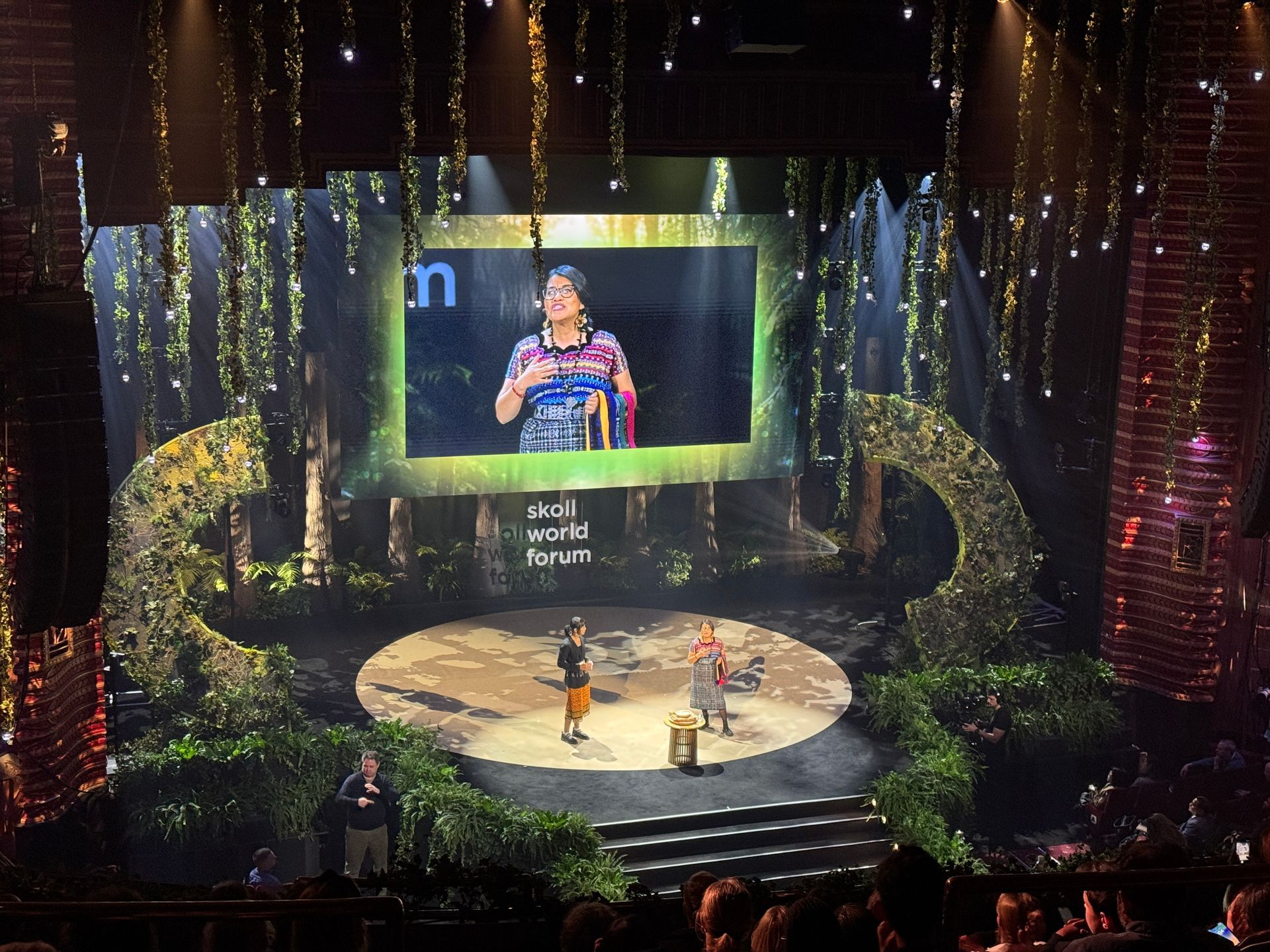
2026 Skoll World Forum in Oxford, UK. For CDI, our first year at Skoll was both a milestone and an invitation: a chance to share what we are learning from communities at home, while listening to others who are asking similar questions around the world.
A theme that emerged for me during the Forum was that the world is fractured, but repair is possible, and that idea stayed with me throughout the week.
What made Skoll feel different from other gatherings was not only the scale of the issues being discussed, but the spirit in which people approached them. The Forum felt generous and relationship-centered, filled with people who brought urgency to their work without losing humility about how much there is still to learn.
Beyond the main Forum, I joined conversations through
Sidebar and the
Marmalade Festival with organizations focused on democracy, land use, and youth leadership, including
DemocracyNext,
Porticus,
The Aspen Institute,
Global Fund for Children, and
The Iris Project. Across these conversations, one question kept surfacing in different forms: how do communities make good decisions when conditions are changing faster than the systems built to support them?
That question sits at the heart of CDI. In Colorado and beyond, communities are facing decisions about land, water, energy, infrastructure, education, recovery, and resilience. These issues are often approached as technical problems or political debates, but in the lives of communities they are also questions of trust, belonging, voice, and power: who has access to information, who is invited in early enough to shape the outcome, and whose priorities become part of the future.
One of the most inspiring parts of the Forum was learning from organizations that have grown from promising models into broader platforms for change. Conversations about opportunities like the
TED Audacious Project and the
Skoll Award for Social Innovation helped me better understand what larger-scale funding and recognition can make possible, and what it asks of an organization in return. The lesson I carried home was not simply that CDI should pursue bigger opportunities, but that we need to keep clarifying the change we are trying to make.
Community visioning, youth leadership, public learning, crisis readiness, and institutional partnership are different expressions of the same belief: communities need the civic strength to shape climate-era decisions before those decisions shape them. CDI remains rooted in the communities where we work, and that grounding is our strength. But our time at Skoll reminded me that local work can carry meaning far beyond its first place of practice when it helps answer questions many communities are facing at once.
We left Oxford with new relationships, sharper questions, and a renewed sense of responsibility. The climate era will ask more of communities than plans alone can provide. It will ask for trust, leadership, imagination, and the capacity to decide together what comes next.
That is the work CDI is growing toward.
To learn more about CDI’s work or explore partnership opportunities,
contact us here.